
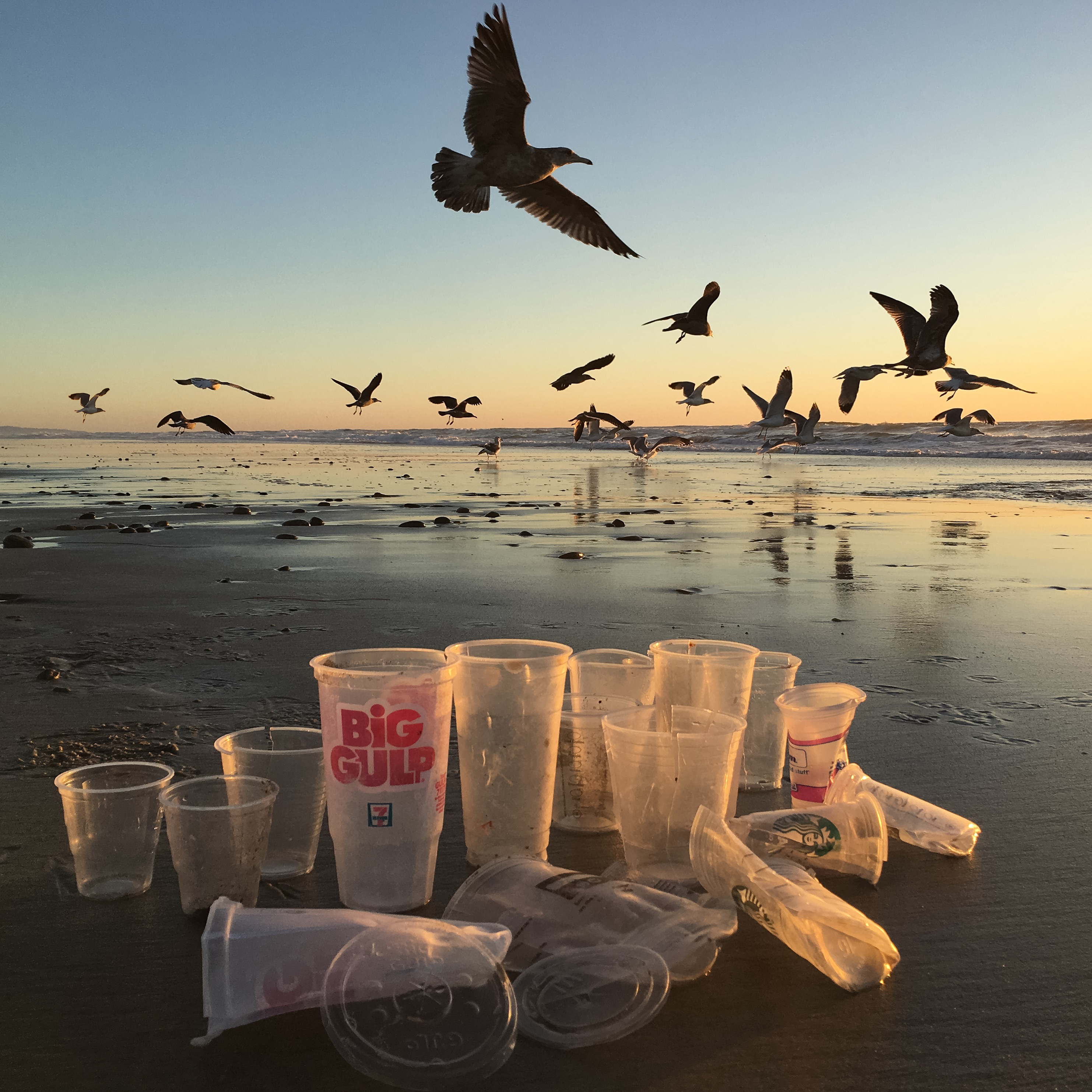
An estimated 8 million tons of plastic enters the ocean every year, and 80% of it comes from land-based sources.
It can travel through storm drains and waterways many miles from the coastline before ending up in the ocean where the currents in the Pacific Gyre trap it in the Great Pacific Garbage Patch.
A study has shown that by 2050 there could be more plastic than fish in the ocean by weight, and all of that plastic is damaging ocean ecosystems. The facts are shocking and the images of injured animals are difficult to view.
Everything I pick up has the potential to do harm. When I clean debris off of the beach, I know that I am helping marine life that could become entangled it, and I realize that I am preventing sea creatures from ingesting harmful plastics.
Every bit I remove is one less piece added to the vast amount of marine debris that already exists. Estimates of the amount of plastic in the ocean vary, and the exact size of the Great Pacific Garbage Patch and the four other garbage patches is unknown, but there is one thing I am certain about—an an ever-increasing amount of trash is washing up on the beaches where I walk.

- Plastic pollution impacts all ecosystems and has been found in the most remote places on Earth, including the Mariana Trench and the Arctic.
- Approximately, 89% of plastic items found on the ocean floor are single-use like plastic bags and bottles.
- More than 800 species are affected by marine plastics through ingestion, entanglement, and damage to habitats.
- More than one million seabirds and 100,000 mammals are killed by plastic debris annually (UNESCO).
- The trailer for the film A Plastic Ocean provides an impactful look at the seriousness of the problem. The short film Our Debris Filling the Sea offers an interesting overview, and the Trash Talk video series presents a kid-friendly introduction that is both accessible and educational.
Human Health Impacts
When I first became involved in raising awareness and promoting prevention of plastic pollution and marine debris, little was known about the impacts on human health. In recent years, however, a growing body of research has revealed increasingly alarming findings—particularly concerning microplastics and their potential health effects.
- An average person ingests about 5g per week or about the equivalent of a credit card.
- Studies have found microplastics in seafood, beer, rice, salt, honey, fruits and vegetables, and proteins such as pork, beef, chicken, tofu, and plant-based meat alternatives.
- Microplastics have been found in the human bloodstream and in brain, lung, liver, and kidney tissue samples.
- Microplastics have been found in breast milk, human placenta, and in ovarian follicular fluid.
- Plastics contain endocrine-disrupting chemicals (EDCs) and “Testing of human samples consistently shows nearly all people have EDCs in their bodies.” (Endocrine Society report)
Watch We Are All Plastic People Now for an in-depth look at how plastics are impacting our health. View the trailer here.
Watch Let’s Talk Tiny: A Deep Dive Into Microplastics — a conversation with with Matt Simon, author of A Poison Like No Other: How Microplastics Corrupted Our Planet & Our Bodies.
Read Plastic and Health: The Hidden Cost of a Plastic Planet.
Climate Impacts
Impacts on people occur at every stage of the plastic lifecycle—from extraction and manufacturing to transportation, consumption, and disposal—with frontline communities facing the greatest harm. These communities often live near plastic production plants, waste disposal sites, or extraction areas like oil and gas fields, exposing them to toxic chemicals, air and water pollution, and hazardous working conditions. This exposure can lead to serious health problems, including respiratory issues, cancers, and other chronic illnesses. Additionally, many frontline communities bear the social and economic burdens of plastic pollution, such as loss of livelihoods from contaminated fisheries or agriculture and increased vulnerability to climate-related disasters exacerbated by plastic waste.
- About 98% of single-use plastic products are made from fossil fuels.
- Greenhouse gases and harmful pollutants are emitted throughout the life cycle
- of plastic.
- Plastic and Climate: The Hidden Cost of a Plastic Planet
Environmental Justice
Impacts on people occur at every stage of the plastic lifecycle—from extraction and manufacturing to transportation, consumption, and disposal—with frontline communities facing the greatest harm. These communities often live near plastic production plants, waste disposal sites, or extraction areas like oil and gas fields, exposing them to toxic chemicals, air and water pollution, and hazardous working conditions. This exposure can lead to serious health problems, including respiratory issues, cancers, and other chronic illnesses. Additionally, many frontline communities bear the social and economic burdens of plastic pollution, such as loss of livelihoods from contaminated fisheries or agriculture and increased vulnerability to climate-related disasters exacerbated by plastic waste.
- Many of the nation’s plastic chemical plants, located near fenceline communities in Texas and Louisiana, release cancer-causing pollutants in proximity to homes, parks, and schools.
- “Incinerators tend to be located in communities of color and low-income communities that already face high pollution burdens…”
- Workers are exposed to the toxic chemicals used in plastics.
- The US exports “recyclable material” to countries where it can overwhelm capacity to manage it.
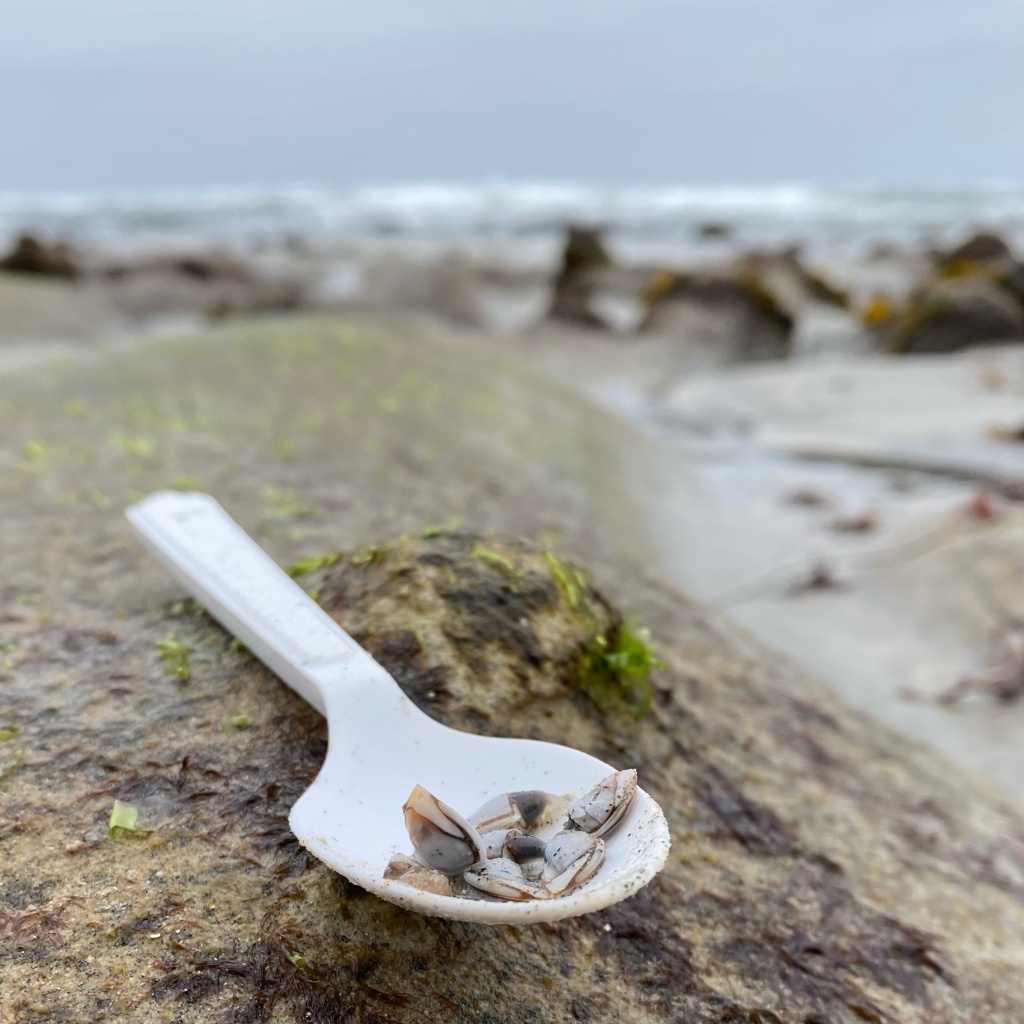
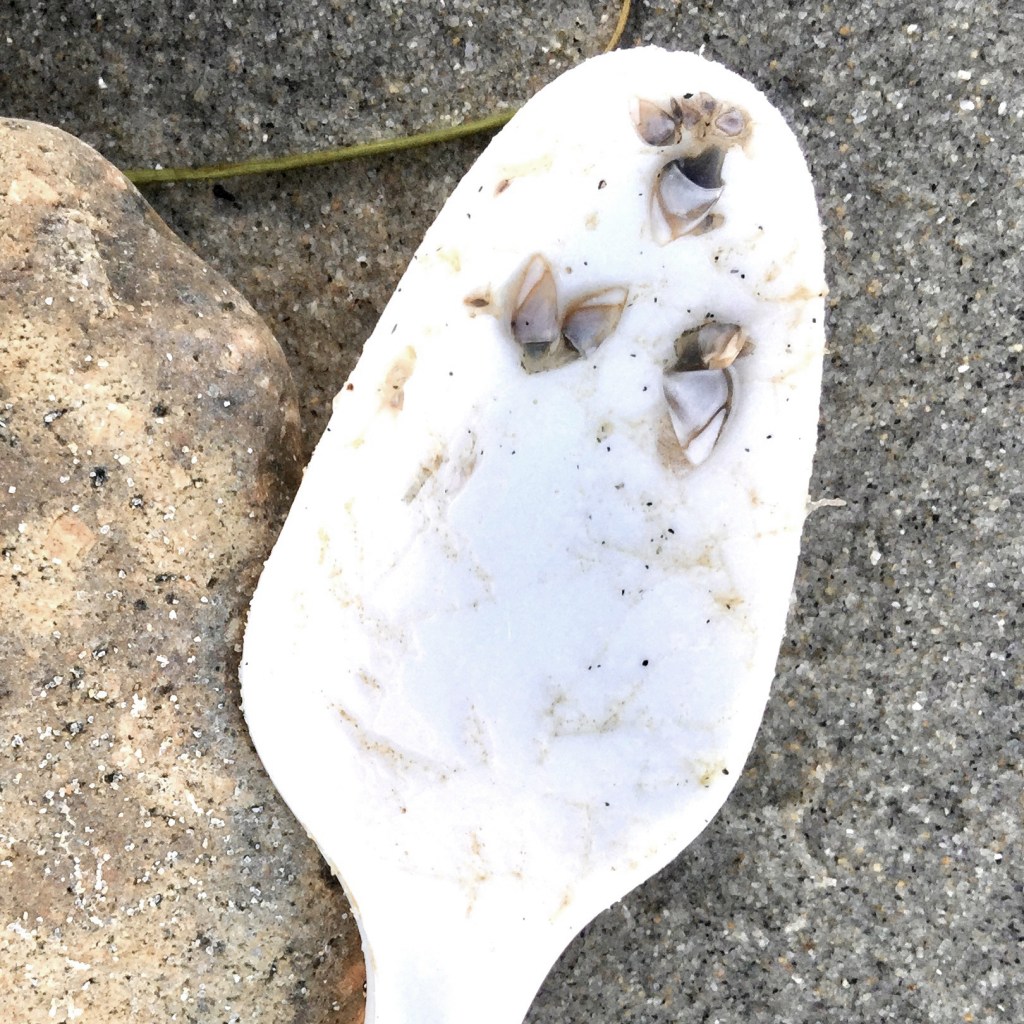
Do You Really Need That Plastic Spoon



 ShoreSweep